Guide Book Category: Becoming a City Sites

  • The Benson Hotel – 1913

    309 SW Broadway

    The Benson Hotel first opened in 1913, more than 110 years ago. The hotel was built by Simon Benson, a successful businessman and generous philanthropist who wanted Portland to have a grand and elegant hotel.  It was designed by A.E.Doyle, a famous Portland architect who designed many of Portland’s most iconic early 20th century buildings. 

    Today the Benson Hotel is on the National Register of Historic Places, which means it is protected because it represents a meaningful part of the city’s past. Over the years, many famous people including actors, politicians, and presidents have stayed there.

    One “fun” fact is that in the early days, guests were provided with clam juice to start their day, NOT coffee!

    Elaborate Interiors

    Inside the hotel, Simon Benson spared no expense in his pursuit of elegance. The ornate lobby features Italian marble floors, a classical coffered ceiling, and Austrian crystal chandeliers that sparkle when the light hits them. The walls and pillars are finished in rare Circassian walnut wood imported from the forests of Imperial Russia, a type of wood that is now extinct. This beautiful walnut remains a focal point of The Benson’s grand lobby and makes it look very rich and historic.  If you look closely at the wood panels you can see images of forest creatures. Ask the students what they see. 

    The ornate ceiling detail can be observed closely by visiting the mezzanine level.  

    Simon Benson Name

    Simon Benson was not only a hotel owner but also a person who gave back to the city. He helped fund public fountains called Benson Bubblers, parks, roads, and schools. His name can be found in many places around Portland because he cared about making the city better.

    Historic Stairway

    One of the most interesting parts of The Benson is the historic stairway. This is a twelve-story stairwell made of original marble, and it feels almost like a museum. Along the walls are over 160 photographs and stories about Portland’s history, famous buildings, and important people. Walking up the stairway is like taking a step back in time to learn about the city’s past.

    Tunnel

    A fun way to exit the hotel by taking the tunnel that goes under Harvey Milk Street and emerges across the street from the Benson Hotel.When entering the tunnel, ask the students to stop halfway, to be silent and to carefully listen for sounds.Then ask them what they have heard, or think they heard.  Once out on the street, ask if they heard cars and why not.

    Benson Today

    Today the Benson Hotel still welcomes visitors from around the world. It is known for its old-fashioned charm, beautiful design, its historic stairway, and its beloved holiday gingerbread tradition.   

    _____________________________________________________

    Discussion Questions::

    Ask the students why a prominent hotel would need a “secret” exit for their famous guests, ask about security and crowd control.  

    Ask why there is a  raised “hill” in the tunnel and talk about the infrastructure beneath city streets.  

    Point out the clocks by the check-in desk. What time is it now—does anyone have a watch?  Why do the clocks on the wall have different times?

    Simon Benson Name: Do you know anyone who has attended Benson High School?”  Good way to start by sharing his investment in the Portland area.

    Has anyone been to Multnomah Falls? Did you know Simon Benson gave it to the City of Portland? Was Simon Benson a “good citizen”?

    Why would a hotel want to have this tunnel?

    Vocabulary: philanthropist, mezzanine, extinct, palace 

    _____________________________________________________

    State Education Standards:

    Social Studies 3.11. Describe how individuals, groups, events, and developments have shaped the communities and regions. Historical Knowledge

    Social Studies 3.12. Compare and contrast the history of the local community to other communities in the region. Historical Knowledge

    Social Studies 3.17. Use a variety of historical sources (artifacts, pictures, documents) to identify factual evidence. Historical Thinking

    ,

  • The Commonwealth Building -1948

    421 SW 6th Avenue

    The Commonwealth Building is a modern 14 story landmark in Portland. It was built between 1944 and 1948, just after World War II, and was one of the first modern skyscrapers in the United States.

    The building was designed by Pietro Belluschi, a famous architect from Oregon. He used a new kind of design called the International Style, which means the building looks simple, clean, and modern. Instead of lots of stone or brick, the Commonwealth is covered with glass and aluminum, which was very new at the time. It was one of the first buildings to use large glass windows and metal panels instead of heavy walls.

    When it opened in 1948, the Commonwealth Building was called the Equitable Building. It was originally the headquarters for the Equitable Savings and Loan Association. Later, in 1965, its name was changed to the Commonwealth Building.

    The Commonwealth Building was important for reasons beyond how it looked. It was one of the first tall office buildings to be completely sealed and air-conditioned, which meant it could stay comfortable inside no matter what the weather was like outside. It also used an early type of heat pump system for heating and cooling, which was a new idea at the time and helped save energy. Because of this, the American Society of Mechanical Engineers called it a National Historic Mechanical Engineering Landmark.

    In 1976, the building was added to the National Register of Historic Places because of its architectural design and historical importance. In 1982, it won a special award from the American Institute of Architects for being a masterpiece of design, technology, and engineering.

    Today, the Commonwealth Building is still used as an office building. People say it was ahead of its time when it was built and that it helped influence how modern office buildings were designed in the United States. Although it may look simple compared to newer skyscrapers, its design was a big change from older buildings and helped start a new style of architecture.

    In many ways, the Commonwealth Building is a special part of Portland’s history. It shows how architects began to think in new ways after World War II, using glass, metal, and technology to make buildings that were lighter, brighter, and more modern.

    Discussion Questions: Look at how simple and straight the building’s lines are. Imagine how different it must have looked compared to older stone buildings when it was first built!

    Vocabulary: commonwealth

    State Education Standards:

    Social Studies 3.11. Describe how individuals, groups, events, and developments have shaped the communities and regions. Historical Knowledge

    Social Studies 3.12. Compare and contrast the history of the local community to other communities in the region. Historical Knowledge

    Social Studies 3.13. Apply research skills and technologies to gather information about the past in a region. Historical Thinking

    ,

  • Director Park – Urban Park – 2009

    815 SW Park Avenue

    Director Park (officially Simon and Helen Director Park) is a popular public park built on top of a large underground parking garage. The park was designed to be a place where people can relax, play, enjoy art, and attend community events right in the heart of the city.

    The park was named for Simon and Helen Director whose family were generous supporters of the arts, parks and public spaces in Portland.

    Director Park is different from many parks you might have seen. Instead of lots of grass and trees, it looks more like a European plaza made of light granite paving stones. It has wide spaces for walking, places to sit and talk, and a glass canopy that provides shade and shelter. There is also a café where people can buy food and drinks.

    One of the most fun features of Director Park is the Teachers Fountain. This fountain was donated by a local family and is dedicated “to all who educate and inspire.” It has a shallow pool and gentle water jets that flow and splash, and many children (and adults!) enjoy playing in the water when the weather is warm.

    Director Park also hosts many events and activities throughout the year, including music and art shows, markets, community gatherings, and performances. Some years there can be more than 300 events scheduled in the park.

    Because the park is in downtown, it is close to many shops, restaurants, and public transportation, so it’s easy for people of all ages to visit. The park also has a giant chessboard and interactive spaces that make it fun for families and friends.

    Director Park is known as a great example of modern public space because it brings people together in a busy city area. It’s clean, welcoming, and lively, and many visitors like to spend time eating lunch, playing in the fountain, or just watching people go by.

    ________________________________________________

    Discussion Questions:

    Notice how this park feels more like a city plaza than a grassy park. Ask students why they think a hard-surface park works well in a busy downtown area.

    Why do you think a city would build a park on top of a parking garage?

    Look closely at the fountain, paving, or structures. Do you see shapes, patterns, or materials that make the park feel special?

    The Glass Canopy – Stand underneath it. Does it feel different than standing in the open plaza? What do you think it protects people from?

    Vocabulary: canopy, urban

    ________________________________________________

    State Standards:

    Social Studies 3.11. Describe how individuals, groups, events, and developments have shaped the communities and regions. Historical Knowledge

    Social Studies 3.12. Compare and contrast the history of the local community to other communities in the region. Historical Knowledge

    Social Studies 3.17. Use a variety of historical sources (artifacts, pictures, documents) to identify factual evidence. Historical Thinking

    ,

  • Hotel Vintage – 1894

    422 SW Broadway

    Hotel Vintage Portland is a historic building with more than a century of stories. Although it is a modern hotel today, the building itself dates back to 1894 and was originally known as the Imperial Hotel. Over the years it was also called The Plaza Hotel, and today it is listed on the National Register of Historic Places, which means it is recognized as an important historic site.

    The building is a good example of Richardsonian Romanesque architecture, a style popular in the late 1800s. This style uses thick stone or brick walls, rounded arches over windows and doors, and heavy, solid shapes that make buildings look strong and sturdy. When the Imperial Hotel was built, this design showed wealth and importance. The arched windows and solid structure helped it stand out among Portland’s early downtown buildings.

    Hotels like this one were very important in the late 1800s and early 1900s. Portland was growing quickly, and travelers arriving by train or riverboat needed places to stay. Grand hotels such as the Imperial welcomed business leaders, politicians, performers, and visitors from around the country. These hotels helped Portland develop into a major city of the Pacific Northwest.

    One special feature of the building today is its central atrium. An atrium is a large open space inside a building that rises through several floors. Light from above helps brighten the interior, creating an open and welcoming feeling. While the building has been updated over the years, the atrium helps connect its historic structure with modern design.

    The building has survived many changes in Portland’s history, including economic ups and downs and shifts in how people travel. By the late 1900s, many historic hotels across the country were being torn down, but this building was preserved. In 1985, it was officially added to the National Register of Historic Places, recognizing its architectural style and its role in Portland’s early downtown life.

    Today, the structure stands as a reminder of Portland’s past. Even though its use has changed over time, the building still shows the strength of Richardsonian Romanesque design and the importance of historic hotels in shaping the city. Walking by, visitors can still see features that connect Portland today with the city that was growing more than 130 years ago.

    _________________________________________________

    Discussion Questions:

    What features make Richardsonian Romanesque buildings look strong and heavy?

    Why were large hotels important to growing cities like Portland in the late 1800s?

    How does saving historic buildings help people understand the past?

    What is an atrium, and why might architects include one in a building?

    Why do you think some old buildings are preserved while others are torn down?

    Vocabulary: atrium

    _________________________________________________

    State Education Standards:

    Social Studies 3.11. Describe how individuals, groups, events, and developments have shaped the communities and regions. Historical Knowledge

    Social Studies 3.12. Compare and contrast the history of the local community to other communities in the region. Historical Knowledge

    Social Studies 3.17. Use a variety of historical sources (artifacts, pictures, documents) to identify factual evidence. Historical Thinking

    ,

  • Multnomah County Central Library

    801 SW 10th Avenue

    The Multnomah County Central Library is one of Portland’s most important public buildings. It has been a place for learning, reading, and community gatherings for more than 100 years. The library opened in 1913 and was designed by famous Portland architect A. E. Doyle, who also designed many other well-known buildings in the city.

    Architecture & Design

    This library takes up a a whole city block and was built in a style called Georgian, which means it looks balanced, strong, and formal. The outside is made of brick and stone, giving it a solid and lasting appearance. Large windows bring natural light inside, which was an important idea in early library design.

    Inside, the library feels grand but welcoming. Visitors see wide staircases, high ceilings, marble details, and beautiful woodwork. The rooms were designed so people could move freely among the books, which was a modern idea at the time. In the Children’s Library, there is a special bronze sculpture called the “Tree of Knowledge,” reminding visitors that learning helps people grow.

    History & Importance

    Before this building existed, Portland already had libraries, but they were too small for the fast-growing city. By the early 1900s, leaders knew Portland needed a large central library. When this building opened, it showed that Portland valued education, reading, and equal access to knowledge for everyone.

    Because of its history and architecture, the building was added to the National Register of Historic Places in 1979. This means it is officially recognized as an important historic place.

    Renovation & Today’s Library

    The building has been carefully updated over the years. In the 1990s, it was strengthened to make it safer during earthquakes and updated for modern use. A major renovation finished in 2024 added new meeting spaces, better accessibility, more seating, and updated technology, while still protecting the historic design.

    Today, the library includes special areas like the Beverly Cleary Children’s Library and the Henry Failing Art & Music Library. It offers free programs, computers, study areas, and events for people of all ages.

    Why This Place Matters

    The Central Library is more than a place to borrow books. It is a community gathering place, a study space, and a symbol of Portland’s belief that knowledge should be available to everyone. Generations of Portlanders have walked through these doors to read, learn, and explore new ideas.

    _______________________________________________

    State Standards:

    Social Studies 3.11. Describe how individuals, groups, events, and developments have shaped the communities and regions. Historical Knowledge

    Social Studies 3.13. Apply research skills and technologies to gather information about the past in a region. Historical Thinking

    Social Studies 3.17. Use a variety of historical sources (artifacts, pictures, documents) to identify factual evidence. Historical Thinking

    ,

  • Multnomah Hotel – 1912

    Embassy Suites   319 SW Pine St.

    Introduction

    Once known as the Grand Lady of Fourth Avenue, the Multnomah Hotel is one of Portland’s most famous and historic buildings. It has stood as a symbol of the city’s hospitality and growth since it first opened its doors in 1912.  At the time, it was one of the largest hotels in the Pacific Northwest, with over 700 guest rooms. The hotel’s grand size and elegant design showed how much Portland had grown since its early pioneer days. The building’s name honors the Indigenous Multnomah people who once lived in the region.

    The hotel’s structure is shaped like a giant “M,” allowing light and fresh air to reach many of the guest rooms. This design made the hotel both beautiful and practical for travelers in the early 1900s.

    A Place for Big Events

    During the early 1900s, the Multnomah Hotel became a center of activity and excitement. Presidents, movie stars, and world travelers stayed there, and it hosted community celebrations, dances, and meetings.

    One of the most memorable events happened shortly after the hotel opened. In 1912. Portland pilot Silas Christofferson made history by flying his Curtiss Pusher biplane off the roof of the Multnomah Hotel.  To accomplish this feat the plane was disassembled and carried in pieces to the roof where it was reassembled.  Christofferson lifted off in front of a cheering crowd and safely landed at nearby Vancouver, Washington.  The daring flight made national headlines and helped make both Christofferson and the Multnomah Hotel famous across the country.  A replica of Christofferson’s plane is on display in the hotel lobby.

    Changes Over Time

    As Portland changed, so did the Multnomah Hotel. After years of success, it closed in 1965, and the building was later used as office space. But its beautiful architecture and history were too important to lose. In the 1990s, it was restored and reopened as a hotel again.  It now has 275 rooms and provides private bathrooms for each room, something not available in 1912.   

    Today, it operates as part of the Embassy Suites by Hilton, but many of its original design details remain. Guests can still admire the ornate plaster ceilings, brass fixtures, elegant chandeliers, and the original post box that once carried guests’ letters through the hotel’s mail chute system. Sharp-eyed visitors can also spot the decorative “M” symbols built into the structure̶ an elegant reminder of the hotel’s proud name and history.

    ______________________________________

    Discussion Questions: 

    I’ve heard that “back in the day” ladies were not allowed to be on the main floor of the hotel unless they were escorted by a gentleman. They had to remain on the mezzanine level. How would we feel about that today?

    Point out architectural features on the columns and the dentil and egg and dart motifs in the ceiling.

    Vocabulary: dentil; egg and dart

    _______________________________________

    State Education Standards:

    Social Studies 3.17. Use a variety of historical sources including artifacts, pictures and documents to identify factual evidence. Social Science Analysis

    Visual Arts.10.CO1.3 Identify and show how artwork forms meanings, situations and/or culture (e.g. popular culture, online and local experiences) Connecting artistic ideas and works with societal, cultural and historical context, to deepen understanding.

    ,

  • Pioneer Courthouse Square – 1984

    701 SW 6th Ave

    Pioneer Courthouse Square is often called “Portland’s Living Room” because it is a place people gather to meet friends, relax, attend events, and enjoy the city. The square is located between SW 6th Avenue and Broadway, and SW Morrison and Yamhill Streets, right in the heart of downtown.

    Pioneer Courthouse Square officially opened in 1984. It was designed as a place where people could gather for events, concerts, and community celebrations. With over ten million visitors annually, Pioneer Courthouse Square is one of the most visited public sites in Oregon. 

    The block has a rich history as the site of a City school (1856 Central School), the 1890 Portland Hotel, and a former two-story parking lot in 1951.  The archway and gate work from the Portland Hotel are still part of the Square.  

    A Living Room for Portland 

    In the late 1970s and early 1980s, community members worked together to turn the parking lot into a public square. Many people in Portland believed downtown needed a place for people instead of vehicles.  A nonprofit group called the Pioneer Courthouse Square Foundation helped raise money. People could sponsor engraved bricks with names or messages, and today thousands of those bricks cover the square’s ground. Visitors can still sponsor and purchase engraved bricks today through the Pioneer Courthouse Square Foundation, allowing new names and messages to become part of the square’s history.

    Art Work 

    The square also features well-known public art.

    Every noon, the Weather Machine performs, forecasting upcoming weather by displaying one of three metal figures amid a show of mist and flashing lights. Helia, a golden sun, indicates a clear, sunny day; Blue Heron predicts mist, drizzle, and changeable weather; and fierce, open-mouthed Dragon forecasts heavy rain, storms, or stormy weather

    Allow Me, often called the “Umbrella Man,” which shows a man holding an umbrella and offering shelter. 

    A signpost displays distances and directions to global destinations, including many of Portland’s sister cities and local landmarks. lets visitors know how far they would have to travel and in which direction to reach sights such as Timbuktu, Great Wall of China, Hermiston, Pacific Ocean.

    Echo Chamber is a small, semi-circular amphitheater near the Southwest Morrison Street side that creates a dramatic acoustic effect.  By standing on the central granite disc and speaking toward the steps, the voice is reflected back at high volume, making it sound like the speaker is in a concert hall.

    These artworks help make the square unique and fun to visit.

    Many important events take place at Pioneer Courthouse Square each year. There are music concerts, cultural festivals, holiday celebrations, and even the city’s official Christmas tree lighting. Because it is in the middle of downtown, it is easy to reach by bus, streetcar, or light rail.

    Pioneer Courthouse Square shows how people can change a city space for the better. Instead of a parking lot, Portland now has a welcoming place where people of all ages can gather. It is a symbol of community pride and an important part of Portland’s downtown life.

    Guide Tip: Look at the bricks on the ground. Can you find one with a name, message, or date? Each brick tells a small story about the people who helped build the square.

    _______________________________________

    Discussion Questions::

    1. Why do you think people wanted to replace a parking lot with a public square?

    2. How do public gathering places help a city feel more connected?

    3. What kinds of events would you like to attend in a place like Pioneer Courthouse Square?

    4. Why are the engraved bricks an important part of the square’s history?

    5. Why do you think Pioneer Courthouse Square is called “Portland’s Living Room”?

    Vocabulary: echo chamber, signpost

    _____________________________________

    State Education Standards:

    Social Studies 3.11. Describe how individuals, groups, events, and developments have shaped the communities and regions. Historical Knowledge

    Social Studies 3.12. Compare and contrast the history of the local community to other communities in the region. Historical Knowledge

    Social Studies 3.17. Use a variety of historical sources (artifacts, pictures, documents) to identify factual evidence. Historical Thinking

    ,

  • Pioneer Courthouse – 1875

    700 SW 6th Avenue

    The Pioneer Courthouse is one of the most important historic buildings in downtown Portland.  For many years the building also served as a major post office, which is why Portlanders sometimes called it the “Pioneer Post Office.”

    The federal government began building the courthouse in 1869, and it opened in 1875. At the time, Portland was still a young city, but it was growing quickly because of shipping, trade, and new businesses. The United States government wanted a strong, official building in Portland where important work could happen, including court trials and government offices. The Pioneer Courthouse became a symbol that Portland was becoming an important city in the Pacific Northwest.

    The courthouse was designed in an Italianate style, which was popular in the 1800s. It was meant to look strong and permanent. One feature to point out is the cupola on top (a small tower-like structure). The building’s stone walls, repeated window patterns, and balanced design help it look formal and important.

    Over time, the Pioneer Courthouse has been changed and repaired to keep it useful. Wings were added in 1905, and the building has gone through several major restorations. One of the most important updates happened in the early 2000s, when the courthouse received a major rehabilitation and seismic upgrade. A seismic upgrade is work done to help a building survive an earthquake. Engineers reinforced parts of the structure inside the walls and floors and strengthened the connections between beams and walls so the building would act more like one solid piece. This allowed the courthouse to move safely during earthquake shaking instead of cracking apart. In a strong earthquake, the building could shift several inches, and in some cases close to a foot, while still standing and protecting the people inside.

    Today, the Pioneer Courthouse is still used as a federal courthouse and is often described as the oldest federal courthouse in the “Far West” that is still in use. This makes it one of Portland’s most important historic landmarks. Across the street, Pioneer Courthouse Square—often called “Portland’s living room”—is one of downtown’s most popular gathering places for events, concerts, and community activities. Together, the courthouse and the square form one of the best-known public spaces in Portland.

    ______________________________________________

    State Education Standards:

    Social Studies 3.11. Describe how individuals, groups, events, and developments have shaped the communities and regions. Historical Knowledge

    Social Studies 3.12. Compare and contrast the history of the local community to other communities in the region. Historical Knowledge

    Social Studies 3.13. Apply research skills and technologies to gather information about the past in a region. Historical Thinking

    ,

  • Sentinel Building

    614 SW 11th Ave.

    The Sentinel Building you see today is actually made up of two historic buildings that were joined together and restored.   It was originally built more than 100 years ago and has changed names and purposes many times.

    The first part of the Sentinel was built in 1909 as the Seward Hotel. Its architecture used Early Modern and Arts and Crafts–influenced design with a fully glazed terra-cotta exterior that was unusual and exciting for Portland at the time. The building was bold, inventive, and showed that Portland was growing into a big city.

    In 1931, the Seward Hotel was renamed the Governor Hotel. Over the decades, it went through many changes, including periods when parts of it were closed or underused. By the mid-1980s the building needed restoration, and in 1992 it was restored and joined with a neighboring historic building, the former Portland Elks Temple (built in 1923), to become a larger hotel and meeting venue complex.

    The Elks Temple was originally built for the Benevolent and Protective Order of Elks, one of the largest fraternal organizations in the United States. At the time it was completed, it may have been one of the largest Elks lodges in the country and included meeting spaces, ballrooms, gym areas and a swimming pool in the basement. The Elks organization used the building until the early 1930s, after which it served many different purposes before being connected to the hotel.

    Both buildings are listed on the National Register of Historic Places because they are important examples of early‑20th‑century architecture and because they helped shape downtown Portland’s history.

    In 2014, after another extensive renovation, the large hotel was renamed the Sentinel Hotel. The name comes from the robot-like sentinel sculptures that sit along the roofline of the old Seward building. These statues look outward over the city and give the building its distinctive identity.

    The Sentinel’s architectural features reflect different periods in Portland’s development. The terra-cotta exterior, decorative roof sculptures, and historic façades connect visitors to the city’s past, while the careful restoration has preserved details that make the building a living piece of history.

    ________________________________________________

    Discussion Questions::

    Why do you think two historic buildings were joined together instead of being replaced?

    How do the rooftop sculptures give the building its identity?

    Vocabulary: facade, terra cotta, Sentinel

    ________________________________________________

    State Education Standards:

    Social Studies 3.11. Describe how individuals, groups, events, and developments have shaped the communities and regions. Historical Knowledge

    Social Studies 3.12. Compare and contrast the history of the local community to other communities in the region. Historical Knowledge

    Social Studies 3.17. Use a variety of historical sources (artifacts, pictures, documents) to identify factual evidence. Historical Thinking

    ,

  • Portland Transit Mall

    SW 5th Avenue and SW 6th Avenue

    The Portland Transit Mall is one of the most important transportation projects in downtown Portland. It runs along SW 5th Avenue (mostly southbound) and SW 6th Avenue (mostly northbound). The Transit Mall makes it easier for people to travel through downtown using buses and light rail instead of driving cars.

    The Transit Mall first opened in 1977. At the time, Portland leaders were concerned  that downtown streets were becoming too crowded with cars. They wanted downtown to be a better place for people to shop, work, and walk around. The Transit Mall was developed as part of Portland’s plans to make downtown more people friendly and to support public transit. Instead of putting buses on many different streets, Portland created a special corridor where transit was  organized and easier to use.

    One of the unique features of the Transit Mall is that it was designed not only for transportation, but also for walking. The original mall included wider sidewalks, brick paving,  trees, benches, and shelters. In 2007–2009, Portland rebuilt and updated the Transit Mall. When it reopened in 2009, it was redesigned to handle not only buses but also MAX Light Rail trains. The rebuild included new platforms, updated streets, and improvements for safety and access. One of the visual clues that you’re on the Transit Mall is the distinctive red brick paving used along the bus and light-rail corridor.Some shelters in the Transit Mall include electronic information signs to assist  riders in knowing when the buses and light rail trains are arriving and departing. 

    A special and memorable part of the Portland Transit Mall is its public art. When the mall opened in 1977, Portland installed a group of outdoor sculptures to make the corridor more interesting for people walking downtown. During the 2009 rebuild, most of the original sculptures were refurbished and returned to the mall, and newer pieces were add People enjoy this art because it is not inside a museum. You can see it up close while walking down the street. Some sculptures are shiny and reflective. Some include moving water in fountain designs. Others are giant abstract shapes that can look like machines, puzzles, or parts of spaceships—depending on your imagination.

    Here are several Transit Mall art pieces that are especially interesting to kids, along with where they can be found:

    • Untitled (1977) by Bruce West (stainless steel, reflective): SW 6th Avenue between SW Washington Street and SW Stark Street.

    • Untitled (1977) fountain by Lee Kelly: SW 6th Avenue and SW Pine Street.

    • Interlocking Forms (1977) by Donald Wilson: SW 5th Avenue and SW Washington Street.

    • Talos No. 2 by James Lee Hansen: SW 6th Avenue and SW Stark Street.

    In addition to the art directly on the Transit Mall, there is also fun public art on nearby side streets. One of the best kid-friendly examples is Animals in Pools (1986) by Georgia Gerber. These are bronze animal sculptures placed around small water pools, and they include Northwest animals such as bears, beavers, otters, seals, deer, and wood ducks. These sculptures are located along SW Yamhill and SW Morrison, between SW 5th Avenue and SW 6th Avenue (near Pioneer Courthouse).

    Because of its transportation design, walkable streets, and public art, the Portland Transit Mall is more than just a place where people catch a bus or the MAX Light Rail. It demonstrates  how Portland decided to invest in a downtown that works for the community—students, workers, shoppers, and visitors. The development of the Transit Mall elevated  Portland to national status  for planning a city where public transit and walking play a big role in daily life.

    ____________________________________________

    Student Scavenger Hunt: Find the Art!

    1) How many different sculptures can you spot on or near the Transit Mall?

    2) Can you find a sculpture that is shiny enough to reflect the street or your face?

    3) Can you find any art that includes water or a fountain? What sounds do you hear?

    4) On SW Yamhill or SW Morrison, how many animal sculptures can you find? Which animal is your favorite?

    5) Pick one sculpture and describe what it looks like. Does it remind you of an animal, machine, or something else?

    Vocabulary: transit, sculpture, public art

    _________________________________________________

    State Standards:

    Social Studies 3.11. Describe how individuals, groups, events, and developments have shaped the communities and regions. Historical Knowledge

    Social Studies 3.12. Compare and contrast the history of the local community to other communities in the region. Historical Knowledge

    Social Studies 3.17. Use a variety of historical sources (artifacts, pictures, documents) to identify factual evidence. Historical Thinking

    ,

  • Portland Flag

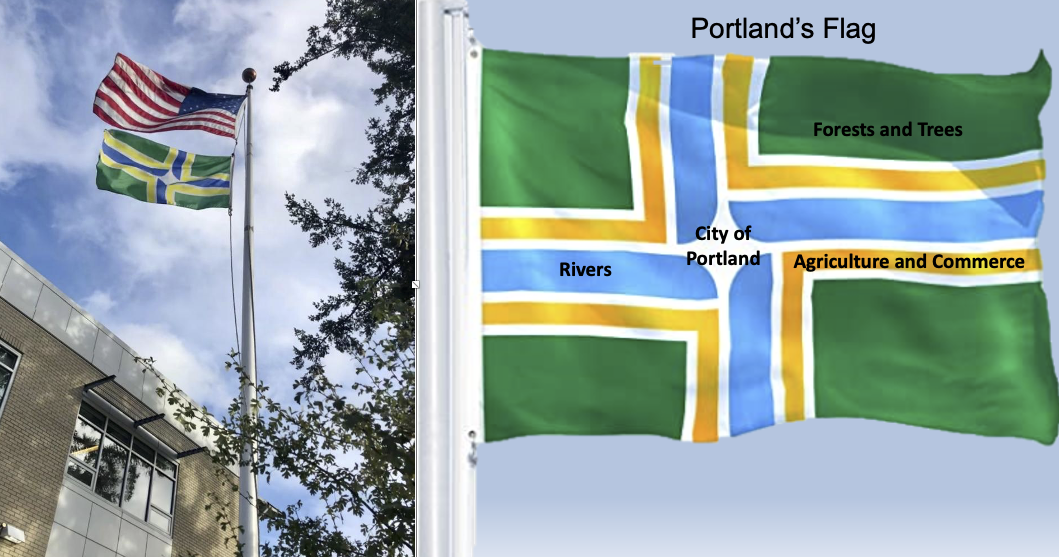
    The Portland flag, designed in 1969,  is a symbol that represents the city of Portland, Oregon. It features a green background with a white  star in the center and blue and yellow intersecting lines. Each part of the flag has a special meaning connected to the city.The blue lines represent the Willamette and Columbia Rivers that flow through Portland. The green background stands for the surrounding forests and the city’s parks. 

    The white star signifies Portland where the Willamette River and Columbia Rivers meet. 

    The yellow lines symbolize agriculture and commerce. 

    The flag reflects Portland’s identity and values as a river and forest city.

    ______________________________________________

    Discussion Questions:

    Why do cities use symbols like flags?
    How does the Portland flag show the city’s values?
    What symbols would you choose for a city flag?
    Why is nature important to Portland’s identity?

    Vocabulary Words

    Symbol – Something that represents an idea or place.
    Identity – What makes a place unique.
    River – A large natural stream of water.
    Design – The way something is planned or created.

    _______________________________________________________

    State Education Standards:

    Social Studies 3.11. Describe how individuals, groups, events, and developments have shaped the communities and regions. Historical Knowledge

    Social Studies 3.12. Compare and contrast the history of the local community to other communities in the region. Historical Knowledge

    Social Studies 3.14. Explain why individuals and groups in the same historical period differed in how they viewed and interpreted events. Historical Perspective

    ,

  • Horse Drawn Street Cars – 1872 – 1889

    Trolley Street  – SW First Ave.

    The story of Portland’s early horse-drawn streetcars begins in 1872, when the city was still small and most people walked wherever they needed to go. As businesses and houses spread out from the riverfront, walking became harder, especially in muddy winter weather. To solve this problem a local businessman built the city’s first horse-drawn streetcar line. The line ran along First Street through the downtown business district.

    The first route was only about two miles long.  The cars ran on iron rails set into the street and were pulled by one or two horses. Even though the cars were not very fast, they were more comfortable than walking in the mud and rain. 

    Fares were low enough that many workers could afford them, and the trolleys helped connect neighborhoods to the downtown area. Because the cars followed fixed rails, they were smoother and safer than regular wagons on rough streets. 

    However, horse-drawn streetcars had problems. Horses got tired, needed food and stables, and could not pull heavier cars very far or very fast.  By 1889 electric streetcars were introduced. These new electric streetcars were faster, cleaner, and cheaper to run.

    Even though they operated for only a few decades, Portland’s early horse-drawn streetcars were very important. They were the city’s first real public transit system and showed people that they did not have to live and work in the same small area. The lines encouraged new neighborhoods, helped businesses grow, and prepared the way for the larger network of electric streetcars that would come next. 

    Today, when modern streetcars run through downtown Portland, they are part of a long story that began with those small wooden cars, iron rails, and hard-working horses in 1872.

    Note:  Discuss horse drawn street cars anywhere along SW 1st and point out Max lines.   

    _______________________________________________________________________

    Discussion Questions:

    What were some problems with using horses to pull street cars?

    What “streetcar” runs along this street today?

    Vocabulary: fixed rails

    State Education Standards:

    Social Studies 3.1 Examine how different levels of city and county government provide services to members of a community. Civics and Government

    Social Studies 3.19 Analyze different ways that people, other living things, and the environment might be affected by an event, issue, or problem. Social Science Analysis

    ,

  • U.S. National Bank (USNB) Building

    Between 6th Avenue and Broadway on Stark Street

    The U.S. National Bank (USNB) Building is a four-story building and is considered Portland’s finest example of classical architecture. “Classical” means the design is based on ideas from ancient Roman civilization, where buildings were made to look strong, balanced, and important.

    The architect of the building was A.E. Doyle, one of the most important architects in Portland in the early 1900s. Doyle designed many of the city’s best-known buildings, and the USNB building shows his skill in creating a structure that looks powerful and dignified.

    Although the USNB building appears to be made of solid stone, it is actually a concrete structure. The outside is covered with granite on the lower levels and terra cotta on the upper levels. Terra cotta is a type of clay that has been baked in a furnace to make it strong and durable. This combination made the building look rich and impressive while still being modern for its time.

    From street level, the most noticeable features are the large classical columns and the beautiful bronze doors. These elements make the entrance feel grand and important. If you look up, you’ll see the name “United States National Bank” in large letters and a very decorated top section of the building, showing detailed craftsmanship.

    The bronze doors are especially important. They were designed by sculptor Avard Fairbanks. If you look closely at the doors on Sixth Avenue, you can find Fairbanks’ signature and the year 1931. That is when the doors were installed — even though parts of the bank building were completed earlier, in 1917 and 1925. The building was constructed in two sections, but they were joined so carefully that it is hard to tell they were built at different times.

    Even more interesting, the third floor of the Wells Fargo Building next door connects to the USNB building at the same level. This shows how downtown buildings sometimes shared space and were designed to work together.

    The bronze doors tell stories through art. The Broadway doors show the development of transportation in Oregon, while the Sixth Avenue doors show ideas about international goodwill. Two smaller bronze doors beside the main Sixth Avenue doors were added at the same time, making the entrance look balanced and complete

    The USNB building stands as a symbol of strength, trust, and Portland’s growth during the early 20th century. Its classical design and detailed artwork make it one of the most important historic buildings downtown.

    ________________________________________________________________

    Discussion Questions:

    Why would a bank want large columns and bronze doors?

    What can you see at the top of USNB?  Eagles, lions’ heads and cupids?

    Why do you think art was included on the doors?

    Vocabulary:

    classical columns

    bronze

    ________________________________________________________________

    State Education Standards:

    Social Studies 3.11. Describe how individuals, groups, events, and developments have shaped the communities and regions. Historical Knowledge

    Social Studies 3.12. Compare and contrast the history of the local community to other communities in the region. Historical Knowledge

    Social Studies 3.17. Use a variety of historical sources (artifacts, pictures, documents) to identify factual evidence. Historical Thinking

    ,

  • U.S. Bancorp Tower and Plaza (“Big Pink”) – 1983

    Between SW 5th and 6th Avenues on W. Burnside

    If you look up from Burnside Street, you can’t miss Portland’s famous pink skyscraper. The U.S. Bancorp Tower and Plaza, often called “Big Pink,” opened in 1983. It became the modern successor to Portland’s earlier U.S. National Bank headquarters. In the years since, it has grown into one of the city’s most recognizable downtown landmarks.

    The building was designed by the architecture firm Skidmore, Owings & Merrill, with well-known Portland architect Pietro Belluschi serving as consultant. The tower’s style is International Style, which usually means clean lines, simple shapes, and a modern “glass-and-stone” look.

    At 537 feet tall, Big Pink is the second-tallest building in Portland, just behind the Wells Fargo Tower (formerly called the First Interstate Tower), which is about 546 feet tall. The tower has 42 floors, but you might notice something odd if you ride the elevator: it shows 43 floors. That is because there is no 13th floor, a tradition in many tall buildings.

    One reason Big Pink looks so unusual is because of the land underneath it. The lot is not a perfect rectangle like many downtown blocks. Instead, it is an uneven shape. The architects used this challenge in a clever way, creating a tower shaped like a rhombus, with a trapezoid-shaped base.

    The nickname “Big Pink” comes from the building’s exterior color. The outside is covered in pinkish granite and reflective glass. In fact, the building uses four different kinds of granite, including Spanish Pink, Canadian Tacoussac, South Dakota Mahogany, and Finnish Red. Altogether, there are about 207 million pounds of granite on the building—an incredible amount of stone for one structure.

    How Big Pink Handles Wind and Earthquakes

    Even though the tower looks heavy and solid, it was designed like a flexible giant—strong, but able to move safely.

    Tall buildings in windy weather don’t stay perfectly still. Instead of trying to fight every gust of wind, Big Pink was designed to sway gently without damage. The building’s structure allows about 0.45 inches of sideways movement for every 12 feet of height. That means the tower can move as much as 21 inches at the 42nd floor.

    Kid-friendly way to think about it: Skyscrapers are like tall trees — they must bend a little so they don’t break.

    This same flexibility also helps during earthquakes. Portland is in a region where earthquakes are possible, so the tower needed to respond safely to shaking. Big Pink includes features that help it “give” a little instead of cracking or breaking.

    One clever detail is the grout used between the granite panels. Unlike stiff mortar, this grout is pliable, meaning it can stretch slightly. This lets the granite exterior move with the building during high winds or earthquake shaking instead of popping loose or cracking.

    The building also has special movement devices in its structure. An example of one of these devices can be seen in the KPFF lobby, showing how engineers designed the tower to bend without failing.

    Today, Big Pink is more than just an office tower—it is a major piece of Portland’s skyline. Standing here, it is easy to see how the city changed in the late 1900s, moving upward with bold new architecture and earthquake-ready design.

    ______________________________________________

    Discussion Questions:

    Ask students if they can guess why it’s called “Big Pink”.

    Shape of the building: Have the group notice that it is not a square tower. Explain that the odd-shaped lot helped create the rhombus (diamond-like) tower and base.

    Why do you think there is no 13th floor?

    Measure 21” to show how much the building could sway on the 42nd. floor.  Do you think you could feel it sway that much?

    Vocabulary:

    rhombus, trapezoid, superstition

    Additional Topics to Discuss at this Location:

    Willamette River and Bridges

    Coin Toss – Naming of Portland

    Point out roof top of Multnomah Hotel

    First Interstate Bank Building – which is taller

    Exterior of building and how color looks different in different weather

    ______________________________________________

    State Education Standards:

    Social Studies 3.11. Describe how individuals, groups, events, and developments have shaped the communities and regions. Historical Knowledge

    Social Studies 3.12. Compare and contrast the history of the local community to other communities in the region. Historical Knowledge

    Social Studies 3.13. Apply research skills and technologies to gather information about the past in a region. Historical Thinking

    ,

  • Wells Fargo Building

    309 SW 6th Avenue

    The Wells Fargo Building is one of the city’s earliest skyscrapers. It was completed in 1907, at a time when most buildings in Portland were only a few stories tall. Rising 12 stories, it seemed extremely tall for its day and showed that Portland was becoming a modern and important city.

    This building is often called Portland’s first true skyscraper because it used a steel frame structure. Before steel frames, buildings had to rely on thick walls to hold them up, which limited how tall they could be. The new steel technology allowed buildings to rise higher while using thinner walls and larger windows.

    The Wells Fargo Building was designed in a style that looks strong and formal, which matched the image banks wanted to show — safety, trust, and importance. One famous detail is the building’s massive granite entrance. At the time it was built, the granite slab used at the entrance was said to be the largest single piece of granite ever shipped to Portland. This impressive stone helped show the power and stability of the bank.

    The building was originally associated with banking and financial businesses that helped Portland grow in the early 1900s. During this period, Portland was expanding quickly because of trade, railroads, and shipping along the Willamette River. Buildings like this one showed confidence in the city’s future.

    In 1946, the building was purchased by U.S. National Bank of Portland, which used it as part of its headquarters. Over the years, the building continued to be used for offices, but its historic design remained an important part of downtown’s character.

    Because of its age and importance, the Wells Fargo Building was added to the National Register of Historic Places in 1986. This means it is officially recognized as a historic landmark worth protecting. Today, when you walk past it, you can still see how early 20th-century architects used stone, steel, and careful design to create buildings that looked strong and lasting.

    The Wells Fargo Building helps us understand how Portland grew from a frontier town into a modern city. It stands as a reminder of early skyscraper technology and the important role banks played in the city’s development.

    Wells Fargo Stage Coaches

    We know Wells Fargo as a banking company today, but a large part of its early business was express delivery of mail and packages by stagecoach after the Gold Rush of 1949.  The Wells Fargo stagecoaches made the trip from St. Louis, Missouri to San Francisco, California, in three weeks–stopping only long enough to change horses and/or drivers.  Passengers could get off to spend the nights in coach inns or hotels and board another coach on a following day.  There were three levels of fare.  Those paying the least had to get out and push the stagecoach on uphill roads.  Those paying a medium fare had to get out and walk up the hills.  The highest fare permitted the passenger to remain in the coach while the other pushed and walked!

    ___________________________________________________________

    Discussion Questions:

    Do you know what Wells Fargo was before it was a bank?

    Why was a 12-story building considered very tall in 1907?

    How did steel framing change the way buildings could be constructed?

    Why would a bank want its building to look strong and solid?

    What details on the outside of the building make it look important?

    Why is it important to preserve early skyscrapers like this one?

    Vocabulary: Skyscraper, 

    ___________________________________________________________

    State Education Standards:

    Social Studies 3.11. Describe how individuals, groups, events, and developments have shaped the communities and regions. Historical Knowledge

    Social Studies 3.12. Compare and contrast the history of the local community to other communities in the region. Historical Knowledge

    Social Studies 3.17. Use a variety of historical sources (artifacts, pictures, documents) to identify factual evidence. Historical Thinking

    ,

  • Portland History Overview

    Understanding the history of Portland from its founding to its present day character and development will help guides as they develop their own stories for their tours.  

    Portland’s history is especially well suited to place-based storytelling. Many of the forces that shaped the city—rivers, trade, transportation, labor, planning, and protest—are still visible in its streets, buildings, bridges, and public spaces. The role of the guide is to help participants connect what they see to why it exists.

    Before Portland: Native Peoples, The Clearing, and the River

    Why this Section Matters on Tour
    Before Portland was a town, a port, or a city, this place already mattered. Thousands of years before streets or buildings, people lived, traveled, traded, and gathered here. This section helps guides explain that Portland’s story did not begin with settlement, but with the land and the rivers—and the Native peoples who knew them best.

    Indigenous Peoples of the Portland Area
    Archaeological and oral history evidence shows that Indigenous peoples have lived in the Pacific Northwest for at least 10,000 years. In the region that would become Portland, life centered on the Willamette and Columbia Rivers, which provided food, transportation, and connection.

    The Columbia River marked a major cultural and linguistic boundary. Chinookan-speaking peoples, including the Multnomah and Clackamas, lived along the lower Columbia and Willamette Rivers. Kalapuyan-speaking peoples, including the Tualatin, lived south and west in the Willamette Valley. These groups were connected through trade networks long before Europeans arrived.

    Living with the Land and Water
    Native peoples carefully managed the land through seasonal fishing, gathering, and controlled burning that maintained open areas. The environment was not “untouched wilderness”—it was actively shaped and maintained.

    Disease, Colonization, and Displacement
    European contact brought catastrophic change. Diseases such as smallpox and measles spread rapidly through Native communities in the late 1700s and early 1800s, often before large-scale settlement. As settlement increased, U.S. policies accelerated displacement. The Oregon Donation Land Act of 1850 granted land to white settlers, ignoring Indigenous land use. Treaties and coercion forced many Native peoples onto reservations.

    The Clearing: a place before a city
    On the west bank of the Willamette River was a small open area later known as “The Clearing.” In an otherwise dense forest, this open space stood out. It likely existed because Native peoples maintained it and because it worked as a resting and gathering place along a major river route. Later, trappers, traders, and settlers used the same spot.

    Rivers as the Constant
    The Willamette River is the through-line of Portland’s history. It fed Indigenous communities, drew early settlers, enabled trade and shipping, and shaped where the city grew.

    Guide Takeaway
    Portland exists here because people have been using this river for thousands of years.

    From Rival Towns to Portland: Why This City Won

    Why this Section Matters on Tour
    Portland’s rise was not guaranteed. In the mid-1800s, several towns along the Willamette River competed to become Oregon’s leading city. Understanding why Portland succeeded helps participants see the city as the result of choices, investments, and timing—not destiny.

    A River Full of Competitors
    As American settlement expanded in the 1840s, towns sprang up along the Willamette River. Major rivals included Oregon City, Milwaukie, and St. Helens.

    Oregon City: Early Power, Built-In Barriers
    Oregon City had the Willamette Falls for water power and early industry. But the falls blocked navigation for large ships. As shipping increased, Oregon City’s location became a disadvantage.

    Milwaukie and St. Helens: Strong But Limited
    Milwaukie developed mills and shipyards, but struggled to match Portland’s port infrastructure. St. Helens had access to ocean-going ships, but lacked strong inland connections.

    Portland’s Key Advantage: A Working Harbor
    Portland’s success rested on a reliable working harbor. Ships could dock, load, and unload efficiently. At Portland the Willamette River was deep enough to handle ocean going ships of the day.  This helped Portland win over other cities farther up river where the water became shallower. Early road connections to the Tualatin Valley linked farms to the port.

    Investment and Promotion
    Portland’s boosters built docks and warehouses, supported roads, and promoted Portland as the place to invest. These choices created momentum.

    Gold Changes the Game
    The California Gold Rush accelerated Portland’s rise by increasing shipping and demand for supplies.

    Guide Takeaway
    Portland won because it worked better for trade—and once it pulled ahead, momentum did the rest.

    Becoming a City: Fire, Flood, Growth, and Reinvention

    Why this Section Matters on Tour
    Portland did not grow in a straight line. It grew through crisis, rebuilding, and adaptation. Fires and floods repeatedly damaged the city, while bridges and infrastructure allowed expansion beyond the original waterfront.

    From Frontier Town to Incorporated City
    Portland incorporated in 1851 and began providing basic services. Early streets were muddy, stumps remained for years, and wooden sidewalks were common.

    Fire: Destruction and Opportunity
    With wooden buildings packed near the river, fire was a constant threat. The fires of 1872 and 1873 destroyed large portions of downtown, especially near the waterfront. Rebuilding encouraged brick, stone, and cast iron construction and a more permanent commercial core was developed.

    Flood: Rethinking the River
    The Great Flood of 1894 turned parts of downtown into waterways and reinforced the river’s danger. Over time, Portland shifted major civic and commercial activity slightly inland and uphill.

    Bridges Transform the City
    Bridges changed Portland’s shape. The Morrison Bridge opened in 1887, and the Steel Bridge opened to pedestrians in 1889 (later replaced in 1912). Bridges enabled rapid east-side growth. The annexation of Albina and East Portland in 1891 created a two-sided city.

    Reinvention as a Pattern
    Crisis followed by reinvention is a repeating Portland theme: rebuild stronger, expand infrastructure, and adapt the city’s relationship to the river.

    Guide Takeaway:
    Various crises – fire, flood – forced Portland to rebuild—and rebuild differently.

    Working Portland: Labor, Immigration, Chinatown, and Skid Road

    Why this Section Matters on Tour
    Portland was built by working people—loggers, dockworkers, railroad laborers, and service workers. At the same time, the city developed systems of exclusion and inequality that shaped who benefited from growth.

    A Working Port City
    By the late 1800s and early 1900s, Portland depended on lumber, docks, railroads, and processing industries. Work was often seasonal and dangerous, creating a large population of transient laborers.

    Skid Road: Work, Shelter, and Survival
    Skid Road (later “Skid Row”) developed along what is now West Burnside. The name came from greased log roads that slid timber to the river. The district offered cheap lodging, food, and social networks for workers between jobs.

    Immigration and the Workforce
    Portland’s growth depended on immigrant labor. Chinese immigrants, among others, worked in railroads, logging, agriculture, laundries, and service jobs.

    Chinatown: Community, Culture, and Resistance
    Portland’s Chinatown first developed along SW 2nd and SW 3rd streets.   Due to floods and fire the residents and businesses of China Town were forced to move north of Burnside.  It was a center for businesses and mutual aid but also faced legal discrimination, violence, and exclusion.  Over time, other ethnic groups also settled in the area north of Burnside.   

    Race, Labor, and Exclusion
    Oregon and Portland history include exclusionary laws and discriminatory practices that shaped who could live, work, and build wealth. These patterns still influence the city.

    Organizing and Reform
    Labor organizing and reform movements pushed for better working conditions, public health improvements, and social services.

    Moving the City: Streetcars, Bridges, and Transit

    Why this Section Matters on Tour
    Transportation determines how cities grow. In Portland, each shift—river travel, bridges, streetcars, automobiles, and modern transit—reshaped neighborhoods and daily life.

    Early Movement: A Compact City
    Early Portland was walkable because it had to be. People lived close to docks, jobs, and services.  Although muddy streets made getting around difficult at certain times of the year. 

    Streetcars: Expanding Daily Life
    Horse-drawn streetcars and later electric streetcars allowed people to live farther from downtown. Many neighborhoods grew along streetcar lines.

    Bridges and integration
    Streetcars crossed bridges and linked east-side neighborhoods to downtown, accelerating growth on the east side.

    The Automobile Changes the Pattern
    Cars led to streetcar removal, road widening, and highway construction—changes that often disrupted neighborhoods and affected communities unevenly.  Increased use of the automobile and the need for parking led to the removal of many older downtown buildings and began to reshape downtown Portland.

    A Return to Transit and Walkability
    From the late 20th century onward, Portland invested in transit and walkability, including MAX light rail and modern streetcar service.   Recognizing the need for increased safety for pedestrians and bicycles the City has worked to make streets improvements throughout the city.

    Transportation and Equity
    Access to transportation affects opportunity. Past choices helped some communities and isolated others—an important context for today’s planning conversations.   Many eastside neighborhoods were wiped out by construction projects such as I-5 and a proposed Mt. Hood Freeway which was never built.

    Guide Takeaway:
    Transportation decisions always involved trade-offs—and shaped access to opportunity.

    Governing Portland: From Early City Hall to Todays City Government

    The Commission System (1913)
    Portland’s early government focused on basic services.  In 1913, Portland adopted a commission form of government: a mayor and commissioners who both legislated and managed bureaus. This model was intended to increase efficiency and accountability.

    Long-Term Challenges – A New System of Governing
    As Portland grew, bureau management by elected officials became less effective, and accountability was often unclear.   This system became inefficient for a modern city. 

    A new form of city government (approved 2022; implemented beginning 2025)
    Portland voters approved a major restructure: a stronger mayor, a professional city administrator appointed by the mayor to manage operations, and a larger council elected by districts. Council focuses on legislation and oversight rather than managing bureaus.

    Guide Takeaway:
    After more than 100 years, Portland changed how it governs itself.

    Portland in the Modern Era: Growth, Change, and Ongoing Challenges

    Why this Section Matters on Tour
    Today’s Portland reflects decades of economic change, planning choices, redevelopment, and civic activism. This section helps guides connect recent history to what participants see now.

    From Industrial to Post-Industrial
    As manufacturing declined and shipping changed, former industrial areas—especially along the river—were redeveloped into housing, offices, parks, and cultural spaces.

    Planning and “Livability”
    Beginning in the 1970s, Portland became known for planning and growth management, including the urban growth boundary and investment in transit and walkability. These choices brought benefits and trade-offs.   

    Neighborhood Change and Displacement
    Rising housing costs and redevelopment shifted who could afford to live in certain neighborhoods. Displacement has not been evenly distributed.

    Civic Identity and Activism
    Portland’s modern identity includes strong civic engagement and public debate, continuing older traditions of reform and community organizing.

    Guide Takeaway
    After more than 100 years, Portland changed how it governs itself to better fit a modern city.  Portland continues to evolve.

    Key Themes

    • Geography matters – Portland grew because of rivers and transportation 
    • The city’s success was not inevitable.  It grew because of choices about docks, roads, bridges, and investment.
    • Growth brings opportunity and displacement 
    • Transportation drives change.   Streetcars, bridges, cars, and transit reshaped neighborhoods.
    • Crisis leads to reinvention. Fire, flood, economic shifts, and reform repeatedly changed the city.

    Sources and Further Reading

    Indigenous History and Early Portland

    Oregon Historical Society. (n.d.). Native peoples of the Columbia and Willamette River region. Oregon Historical Society.

    Ruby, R. H., & Brown, J. A. (1986). The Chinook Indians: Traders of the lower Columbia River. University of Oklahoma Press.

    Zucker, J., Hummel, B., & Hogfoss, A. (1983). The Chinook Indians of the lower Columbia. Oregon Historical Society Press.

    Early Portland, Trade, and Growth (Retained Legacy Sources)

    MacColl, E. K. (1988). Merchants, money, and power: The Portland establishment, 1843–1913. Georgian Press.

    Gibbs, J. (1968). West Coast windjammers. Superior Publishing.

    Gibbs, J. (1977). Pacific square-riggers. Superior Publishing.

    Gulick, B. (2004). Steamboats on Northwest rivers. Caxton Press.

    Timmen, F. (1973). Blow for the landing. Binfords & Mort.

    Labor, Immigration, Chinatown, and Urban Life

    MacColl, E. K., & Stein, H. (1992). Merchants, money, and power (Vol. II). Georgian Press.

    City of Portland Bureau of Planning and Sustainability. (2019). Historic context statement: Portland’s Chinese American community. City of Portland.

    Transportation, Bridges, and Transit

    Abbott, C. (2001). Greater Portland: Urban life and landscape in the Pacific Northwest. University of Pennsylvania Press.

    TriMet. (n.d.). History of public transportation in Portland. TriMet.

    City of Portland Archives and Records Center. (n.d.). Portland bridges and transportation history. City of Portland.

    Planning, Growth, and the Modern City

    Metro. (n.d.). Urban growth boundary history. Metro Regional Government.

    City of Portland Bureau of Planning and Sustainability. (n.d.). Comprehensive plan and urban design history. City of Portland.

    Abbott, C. (2012). Portland in three centuries: The place and the people. Oregon State University Press.

    Portland City Government (Updated)

    City of Portland. (2022). Charter reform measure (Measure 26-228) and explanatory materials. City of Portland.

    City of Portland. (2024). Transition to mayor–council form of government. City of Portland.

    Portland City Auditor. (2023). Guide to Portland’s new form of government. City of Portland.

    AI Transparency Statement

    OpenAI. (2025). ChatGPT (GPT-5.2). https://www.openai.com
    ,

  • Portland’s Cast Iron Architecture

    During the mid-19th century, cast-iron façades transformed American commercial architecture. Portland embraced this new technology, becoming second only to New York City in the number of cast-iron buildings constructed. The city’s early commercial district along the west bank of the Willamette River, now known as the Skidmore/Old Town Historic District, became the heart of this architectural era.

    Growth and Flourishing (1850s–1880s)

    Portland’s first cast-iron building, the Hallock-McMillan Building (1857), introduced a new aesthetic of slender columns, ornate arches, and prefabricated façades. Local foundries such as Willamette Iron Works and the Oregon Iron & Steel Company supplied the intricate components, allowing builders to assemble decorative yet strong commercial blocks quickly and cheaply. 

    Between the 1850s and 1880s, the riverfront district filled with two- to four-story brick or wood buildings fronted by cast-iron elements. The result was a unified streetscape of elegance and optimism reflecting Portland’s growing economic power. By the late 1880s, the Glisan Building (1889), now known as Kell’s Irish Pub, marked the style’s last major appearance.

    Reasons for Popularity

    Cast-iron appealed to Portland builders for its combination of practicality and ornament. Prefabricated iron pieces could be shipped by river or rail and installed faster than traditional masonry. The material also allowed larger windows that filled interiors with light—ideal for shops and offices. Architecturally, the ability to mold intricate columns, cornices, and arches provided a sense of grandeur that fit the ambitions of a young city seeking to project prosperity.

    Decline and Demise (1890s–1950s)

    By the 1890s, architectural trends shifted toward steel-frame construction with brick or terra-cotta façades. Cast-iron fronts, once symbols of progress, began to appear outdated. Meanwhile, Portland’s business center moved westward from the waterfront toward Fourth and Fifth Avenues, leaving the cast-iron district behind. 

    In the mid-20th century, urban renewal, parking lot development, and freeway construction—such as the Morrison Bridge ramps—led to the demolition of many of these buildings. Of the roughly 180 cast-iron structures once standing, fewer than seventy survive today.

    Legacy and Preservation

    The remaining cast-iron buildings—mostly concentrated in the Skidmore/Old Town Historic District—are among Portland’s most valuable architectural assets. They offer a rare glimpse into 19th-century urban design in the American West. Their survival owes much to preservation efforts and historic landmark designation. The story of Portland’s cast-iron era is both a celebration of innovation and a cautionary tale about the vulnerability of architectural heritage amid modernization.

    _______________________________________________

    Suggested Discussion:  

    Do you think cast iron ornamentation looks attractive/pretty?  Why

    Vocabulary:  Ornament, ornamentation

    _______________________________________________

    State Education Standard:

    Social Studies 3.11. Describe how individuals, groups, events, and developments have shaped the communities and regions. Historical Knowledge

    Social Studies 3.12. Compare and contrast the history of the local community to other communities in the region. Historical Knowledge

    Social Studies 3.16. Identify how people and events of the past have influenced the present. Historical Knowledge

    Social Studies 3.17. Use a variety of historical sources (artifacts, pictures, documents) to identify factual evidence. Historical Thinking

    VA:Re7.1.3a. Speculate about processes an artist used to create a work of art. Visual Arts Responding

    VA:Re8.1.3a. Interpret art by referring to contextual information and analyzing subject matter, form, and materials. Visual Arts Responding

    ,

  • Clearing & Naming of Portland-1845

    Before it became a city, the area that is now Portland was a forested region along the Willamette River. Long before settlers arrived, Native people—especially the Clackamas and other Chinookan-speaking tribes—used the open space along the river for gathering, trading, and resting. They called this area “the Clearing.” It was a natural meeting place where trails, waterways, and seasonal camps came together.

    In the 1840s, American settlers began moving westward for the rich farmland.  The US government took the land from the Native people and offered it for free to white settlers who agreed to live on the land for 4 years.  Each white male, age 21 and older was given 320 acres of land ; they got 320 acres more if they were married.   Excluded were people of color and single women.

    To claim the land settlers cut marks on trees bordering the land they wanted.  This was called a tomahawk claim and while imprecise it functioned well in the early days when there was plenty of land and few settlers.   

    William Overton wanted to settle on land at the Clearing but he didn’t have the 25 cents to file the claim.   He gave half his claim to Asa Lovejoy from Boston, Massachusetts for 25 cents and built a cabin in the clearing.   

    Francis Pettygrove from Portland, Maine,  wanted to establish a store on the site of the clearing and he bought Overton’s claim for $50 of supplies.  Pettygrove and Lovejoy had a vision that the settlement would become a city.  When it came time to choose a name for their new town, the two men couldn’t agree. Lovejoy wanted to name it Boston, after his hometown, while Pettygrove wanted to name it Portland, after his own hometown. To settle the matter, they flipped a coin—now known as the Portland Penny—and Pettygrove won two out of three tosses. 

    Thus, the new settlement became Portland in 1845. The Clearing soon grew into a busy riverfront town, serving as a stopping place for travelers and traders. Although the name came from a coin toss, the place itself had already been important for generations before settlers arrived. Today, remembering that history helps honor the Native people who first used the land long before it became Portland.

    ___________________________________________________________

    Discussion Questions:  

    What was life like in  ”The Clearing”. 

    Who lived in The Clearing before the settlers came?

    What happened to these people?

    Vocabulary: 

    Settler – a person who moves to a new place or land to establish a home..

    Excluded – when someone or something is excluded, they aren’t allowed in a place.

    ___________________________________________________________________________

    State Standards

    Social Studies 3.11. Describe how individuals, groups, events and developments have shaped the communities and regions. Multicultural Studies, Historical Knowledge

    Social Studies 3.17. Use a variety of historical sources including artifacts, pictures and documents to identify factual evidence. Social Science Analysis

    Social Studies 3.19 Analyze different ways that people, other living things, and the environment might be affected by an event, issue, or problem. Social Science Analysis

    ,

  • Plank Road – 1850s

    What Was the Great Plank Road?

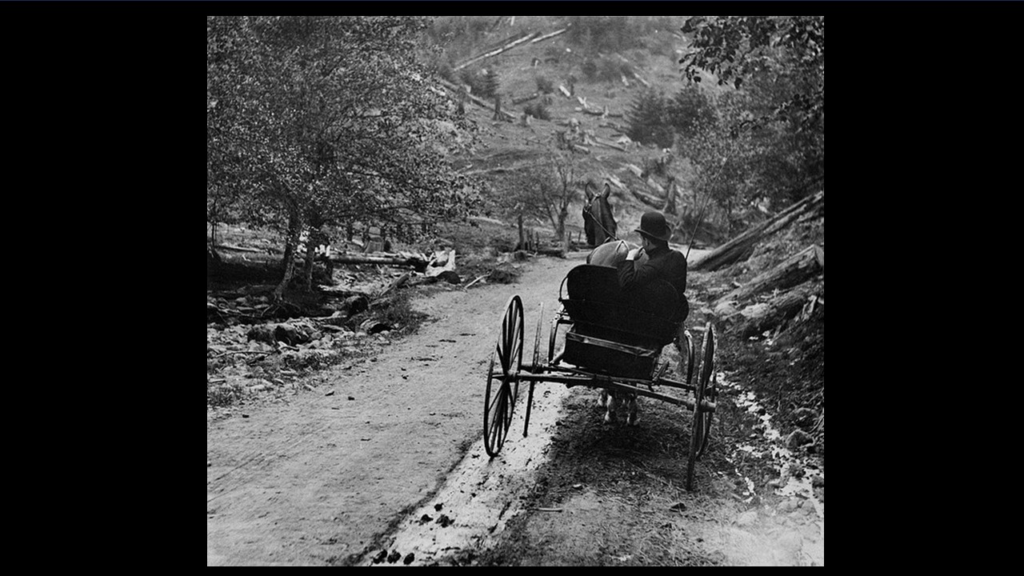
    The Great Plank Road was one of Portland, Oregon’s earliest major roads. Built in the 1850s, it connected the city to the rich farmland of the Tualatin Valley. Before this road, farmers had to use muddy, rocky paths that were hard to travel, especially in bad weather. The wooden plank road made it much easier to bring crops and goods into Portland, helping the city grow.

    How Was It Built?

    The road was made from large wooden planks—each about eight feet long and three inches thick. Workers laid these planks across wooden beams called stringers, creating a flat surface for wagons. The road was wide enough for one wagon at a time, with extra dirt paths on the side for passing. Construction began in 1851, and the first planks were laid during a big celebration that included speeches, a roasted ox, and even a gold coin buried under the first plank. Tolls were charged to use the road. At one point, to try to make the wagons travel faster, animal fat was rubbed on the planks. This had an unfortunate effect: it caused bears to come down from the forest to lick the animal fat.

    Why Did It Matter?

    The Great Plank Road helped Portland become a major city. When settlers arrived in the mid-1800s and gold was discovered in California, the Willamette River became a lifeline for the new community. Early Portland grew up along its west bank because ships could reach it from the Pacific Ocean through the Columbia River. Steamboats traveled up and down the river carrying supplies, lumber, and farm goods. The river made it possible for Portland to become a major port and trading center, connecting the inland farms of the Willamette Valley via the Great Plank Road to markets around the world. Farmers could now transport more goods faster, which boosted trade. It also helped Portland compete with other towns and grow into a busy port city. However, the wooden planks didn’t last long—they rotted and broke down after just a few years. Still, the road showed how important transportation was to building a strong community. The route of the Great Plank Road follows today’s Canyon Road.

    _________________________________________________________

    Discussion Questions

    Why was the Great Plank Road important for Portland’s growth?

    What problems did farmers face before the road was built?

    Why do you think the road didn’t last very long?

    How do you think transportation affects cities today?

    Vocabulary

    Plank Road: A road made from wooden boards.

    Stringers: Long beams that support the planks.

    Tualatin Valley: A farming area west of Portland.

    __________________________________________________________

    State Education Standards:

    Social Studies 3.11. Describe how individuals, groups, events, and developments have shaped the communities and regions. Historical Knowledge

    Social Studies 3.12. Compare and contrast the history of the local community to other communities in the region. Historical Knowledge

    Social Studies 3.13. Apply research skills and technologies to gather information about the past in a region. Historical Thinking

    ,

  • Benson Bubbler – 1912

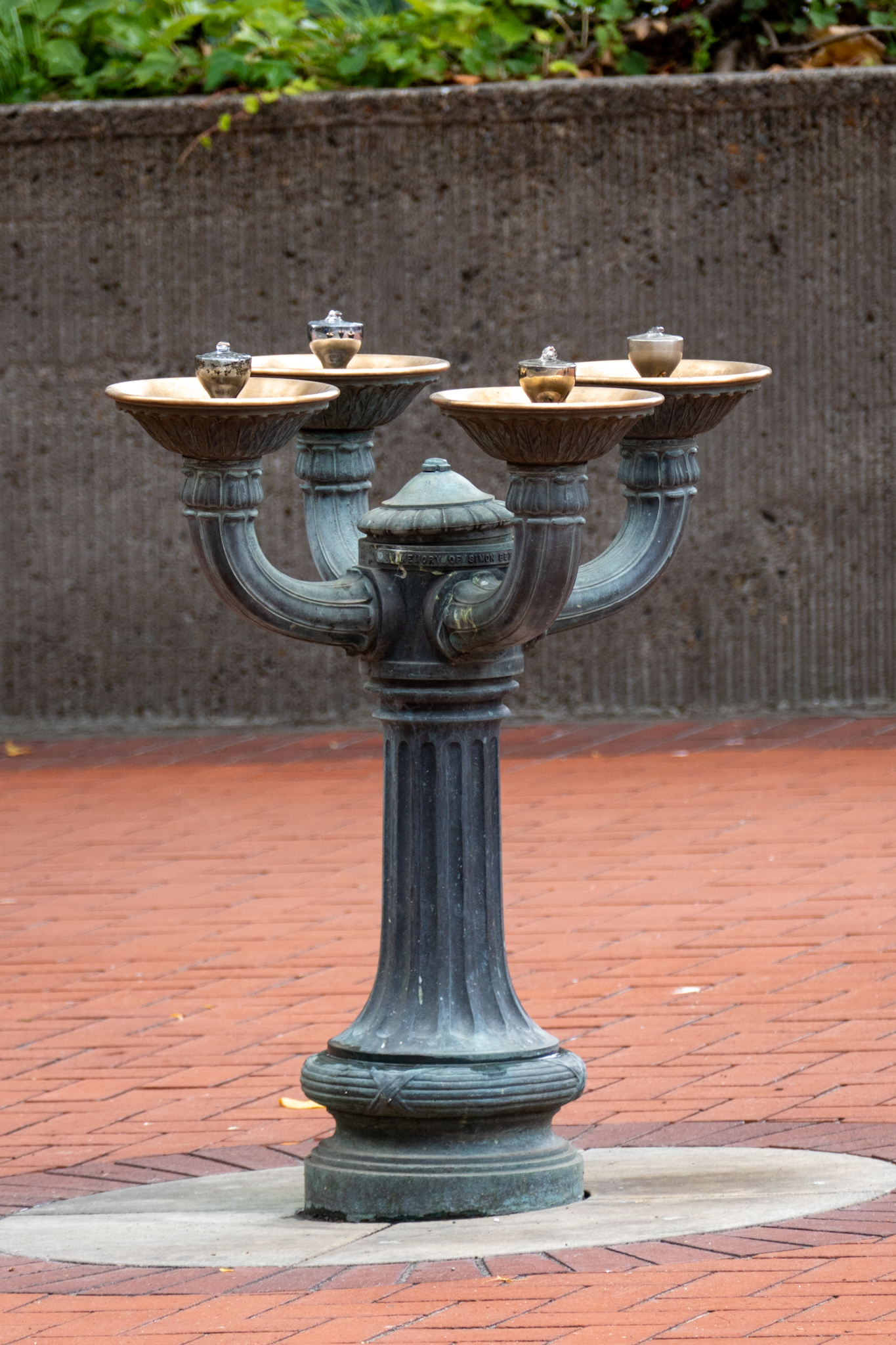
    The Benson Bubblers are iconic four-bowl bronze drinking fountains found throughout downtown Portland, Oregon. They have become one of the city’s most recognizable symbols of civic pride and public generosity.  

    The Gift of Simon Benson

    The fountains were donated to the city in 1912 by Simon Benson, an immigrant from Norway who came to this country at the age of 16. He became a successful businessman and philanthropist who cared deeply about the welfare of Portland’s people.   Over time, two stories have been told about why Benson decided to give the city its famous drinking fountains:

    • He was moved after seeing a thirsty young girl crying during a Fourth of July parade. Moved by her situation, he promised that no one in Portland should ever go thirsty again.
    •  Benson went into a saloon and asked for a drink of water. The saloon refused to give him water unless he bought a beer. He bought the beer, poured it on the floor, and drank the water!

    Whether one story or both are true, they show Benson’s compassion and his belief that small acts of generosity can make a lasting difference.

    In 1912 he donated $10,000 to fund  the design and installation of public drinking fountains.  Architect A.E. Doyle was commissioned to design the 20 fountains. 

    A Portland Icon

    When first installed, 20 fountains were placed throughout downtown Portland, mostly near busy streets and workplaces. Currently, the Portland Water Bureau maintains 52 four-bowl Benson Bubbler fountains and 74 one-bowl variations throughout the city.

    Despite their appearance, the single-bowl fountains are not Benson Bubblers. In fact, in the 1970s, the Benson family asked that the installation of the four-bowl fountains be limited to certain downtown boundaries so as not to diminish their uniqueness.

    A few replicas have been placed in other locations — including one gifted to Portland’s sister city, Sapporo, Japan.

    Legacy

    More than a century later, the Benson Bubblers still flow daily, providing water to residents and visitors alike.  Simon Benson’s gift continues to remind Portlanders of the power of kindness and community spirit.

    Simon Benson also donated Multnomah Falls in the Columbia Gorge to Portland because of its lasting beauty.  He also built the Benson Hotel and donated money to 

    build Benson High School.   Simon Benson was known to have said “No one has the right to die and not leave something to the public and for the public good.” 

    ________________________________________________________

    Suggested Discussion: 

    Before the days when people carried water bottles with them, how would you get a drink of water? 

    Have you ever been thirsty and had a drink from a public water fountain?   

    Do you think he was a good citizen?

    Vocabulary: philanthropist, bubbler 

    ________________________________________________________

    State Education Standards:

    Social Studies 3.11. Describe how individuals, groups, events and developments have shaped the communities and regions. Multicultural Studies, Historical Knowledge

    Social Studies 3.19 Analyze different ways that people, other living things, and the environment might be affected by an event, issue, or problem. Social Science AnalysiNote: For more information on the life of Simon Benson see the Biography section of the Guidebook.

    ,