What Was the Great Plank Road?
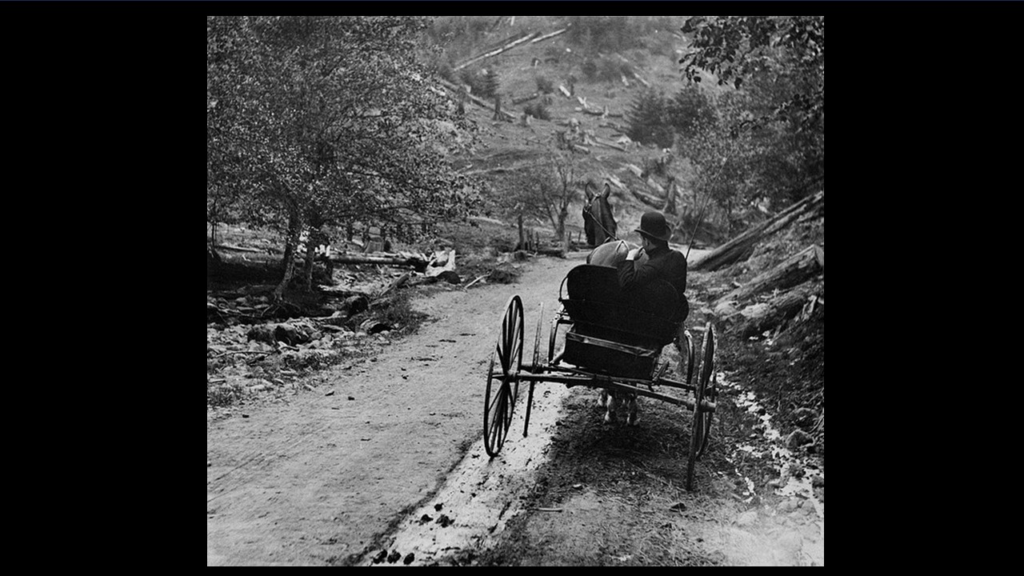
The Great Plank Road was one of Portland, Oregon’s earliest major roads. Built in the 1850s, it connected the city to the rich farmland of the Tualatin Valley. Before this road, farmers had to use muddy, rocky paths that were hard to travel, especially in bad weather. The wooden plank road made it much easier to bring crops and goods into Portland, helping the city grow.
How Was It Built?
The road was made from large wooden planks—each about eight feet long and three inches thick. Workers laid these planks across wooden beams called stringers, creating a flat surface for wagons. The road was wide enough for one wagon at a time, with extra dirt paths on the side for passing. Construction began in 1851, and the first planks were laid during a big celebration that included speeches, a roasted ox, and even a gold coin buried under the first plank. Tolls were charged to use the road. At one point, to try to make the wagons travel faster, animal fat was rubbed on the planks. This had an unfortunate effect: it caused bears to come down from the forest to lick the animal fat.
Why Did It Matter?
The Great Plank Road helped Portland become a major city. When settlers arrived in the mid-1800s and gold was discovered in California, the Willamette River became a lifeline for the new community. Early Portland grew up along its west bank because ships could reach it from the Pacific Ocean through the Columbia River. Steamboats traveled up and down the river carrying supplies, lumber, and farm goods. The river made it possible for Portland to become a major port and trading center, connecting the inland farms of the Willamette Valley via the Great Plank Road to markets around the world. Farmers could now transport more goods faster, which boosted trade. It also helped Portland compete with other towns and grow into a busy port city. However, the wooden planks didn’t last long—they rotted and broke down after just a few years. Still, the road showed how important transportation was to building a strong community. The route of the Great Plank Road follows today’s Canyon Road.
_________________________________________________________
Discussion Questions
Why was the Great Plank Road important for Portland’s growth?
What problems did farmers face before the road was built?
Why do you think the road didn’t last very long?
How do you think transportation affects cities today?
Vocabulary
Plank Road: A road made from wooden boards.
Stringers: Long beams that support the planks.
Tualatin Valley: A farming area west of Portland.
__________________________________________________________
State Education Standards:
Social Studies 3.11. Describe how individuals, groups, events, and developments have shaped the communities and regions. Historical Knowledge
Social Studies 3.12. Compare and contrast the history of the local community to other communities in the region. Historical Knowledge
Social Studies 3.13. Apply research skills and technologies to gather information about the past in a region. Historical Thinking